


Year-end fundraising isn’t just another campaign for your organization. It is your Super Bowl.
This is the moment when everything you have been building toward all year finally converges: your website traffic spikes, your donors’ intent rises, email engagement climbs, and generosity is at an all-time high.
Year-end alone drives 11 percent of annual web traffic and 20 percent of online revenue, with almost half of that arriving in the final week when conversions and gift amounts hit their peak.
Your audience is more emotionally ready to give now than at any other time of year.
Can you feel that?
Excitement!
But you also know how competitive this season gets. Your supporters’ inboxes are overflowing with year-end fundraising appeals, matching gift deadlines, and last-chance reminders from every nonprofit they have ever interacted with.
And that’s just nonprofits. Don’t forget about all of the discount shopping campaigns from your favorite boutique cowboy hat retailer. That one may just be us.
But you get the point.
This is exactly why your year-end fundraising strategies matter. If you are launching your year-end giving campaign or polishing your final appeals, optimizing each touchpoint is what helps your year-end digital fundraising tactics rise above the noise and capture donor intent when it is at its peak.
At Nextafter, we call this the Donor Mountain, where donors move from low-intent engagement at the base to high-intent, high-value giving at the summit.
So to help you make the most of this window, we went back and reviewed more than 1,200 fundraising experiments we have run this year. From that mountain of data, we sifted through all the wins, surprises, and insights to identify the most valuable themes.
What emerged were ten experiments worth testing during your calendar year-end fundraising efforts to help you discover what works best for your potential donors in this high-intent season.
Let’s dive in.
Number 10: Getting to the Point in Email Makes a Difference
Control

Treatment
Why It Matters at Year-End:
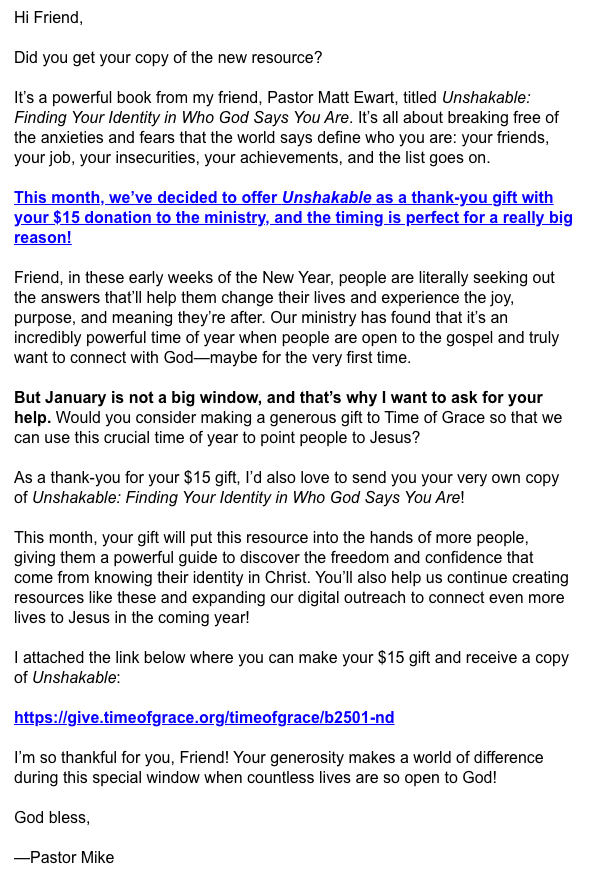
Inbox competition is intense during Calendar Year-End. Donors are scanning quickly and juggling a high volume of messages. A short, direct message can help your nonprofit email fundraising stand out and make it easier for donors to understand what you need and why. It is a simple, effective year-end email strategy that can increase the likelihood of someone taking action during the busiest giving season, especially if you are offering a premium as a thank-you, like many non-profits do.
Takeaway:
Direct email copy can increase click-through rate AND donations if positioned correctly.
Number 9: Donors Are Dory. Simplifying Progress Toward a Goal Increases Gifts
Control
Treatment
What We Tested:
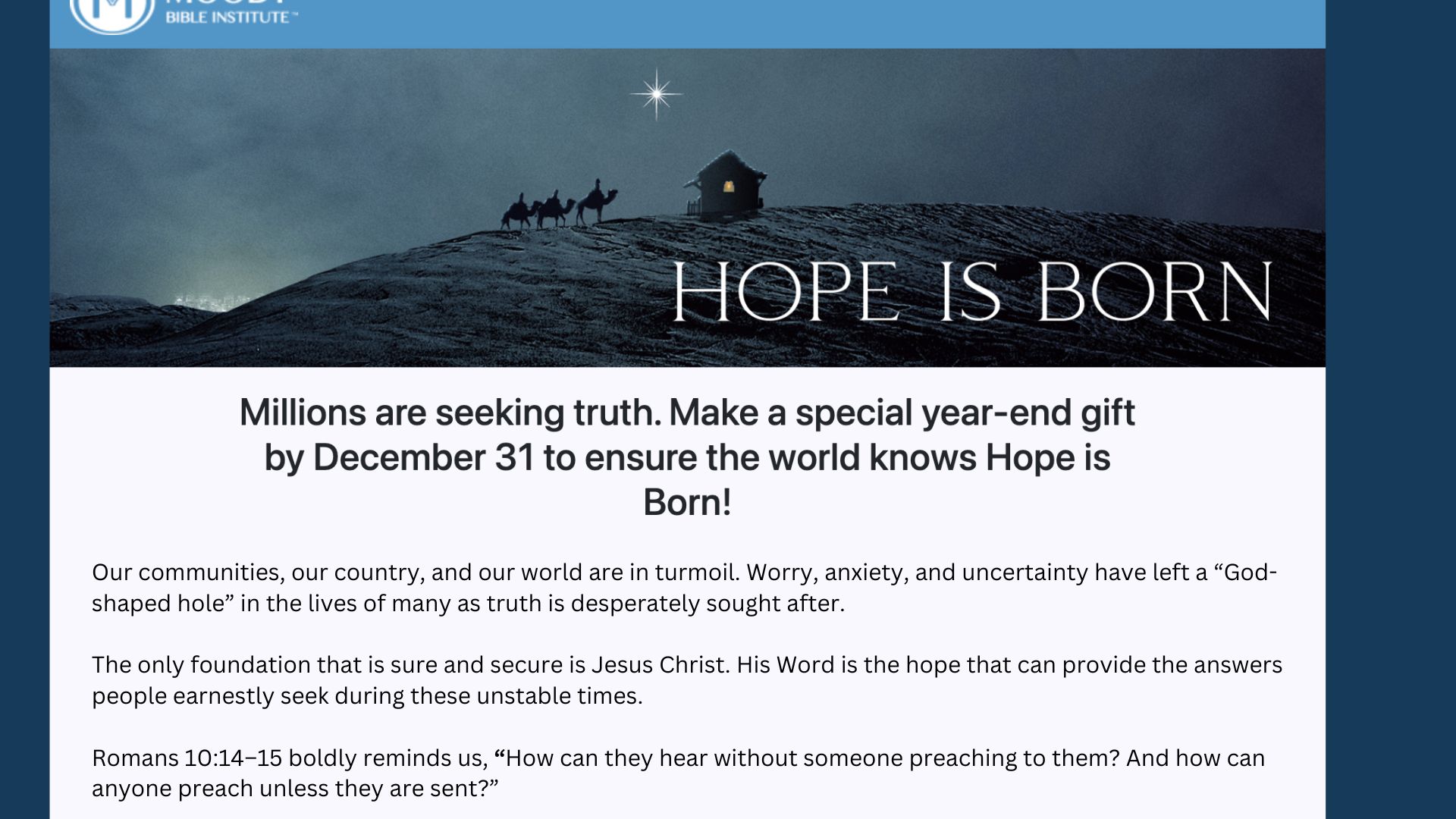
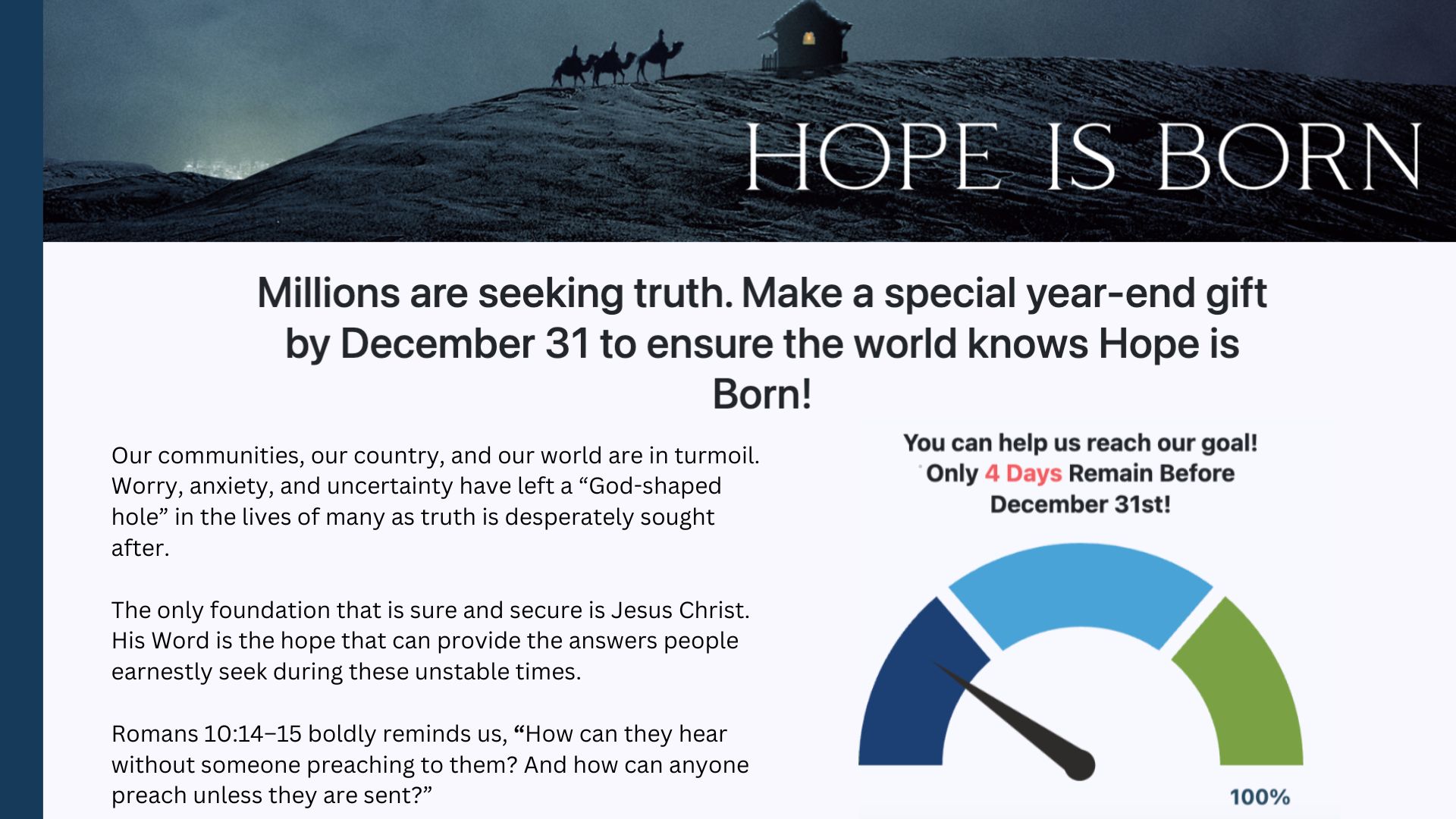
In this experiment, we wanted to understand whether a simple visual cue could communicate urgency more effectively than text alone. We added a countdown-style progress bar to the donation page that gradually filled up as the days in the Calendar Year-End campaign passed. The idea was to see if this kind of donation page testing could help donors instantly understand how close the campaign was to its deadline. And the result: the version with the animated progress bar produced a higher conversion rate.
Why It Matters at Year-End:
During Calendar Year-End, donors are moving quickly and juggling a lot of messages. They do not always pause to read detailed explanations, but they can process visual cues immediately. A progress bar or thermometer is a simple year-end donation page optimization that reinforces urgency in fundraising and helps donors take action faster. It gives people a quick understanding of where the campaign stands without requiring extra effort or attention.
Takeaway:
Clear visual urgency cues, like a progress bar, can increase donor conversion during the final days of year-end.
Number 8: Reminding People of the Gift Amount They Already Forgot
Control

Treatment
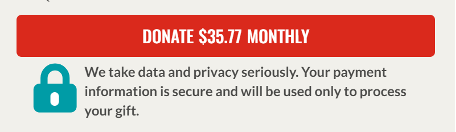
What We Tested:
In this experiment, we wanted to understand whether showing the donor’s chosen gift amount on the final donation button would help reduce hesitation and confusion. When people reach the end of the form, they sometimes lose track of the exact amount they selected, or need reinforcement that they chose a monthly gift, for example. By adding the donation amount directly to the button, we aimed to reduce uncertainty and make it easier for donors to confirm their choice. This simple change led to an increase in completed gifts, suggesting that small clarity cues can support better fundraising conversion optimization.
Why It Matters at Year-End:
Donors are distracted. They have multiple tabs open, notifications firing, and a constant stream of messages competing for their attention. During a busy Calendar Year-End campaign, savvy fundraisers will do everything to reduce any anxiety the donor could feel when making a donation. Adding the amount to the final ‘submit’ button serves as a gentle reminder that eliminates one more moment of doubt. It reflects basic donor psychology: when people feel more certain and less anxious, they are more likely to finish what they started.
Takeaway:
Reminding donors of the gift amount at the moment of giving can increase conversion.
Number 7: Turning Failure Into Success
Control
Treatment
What We Tested:
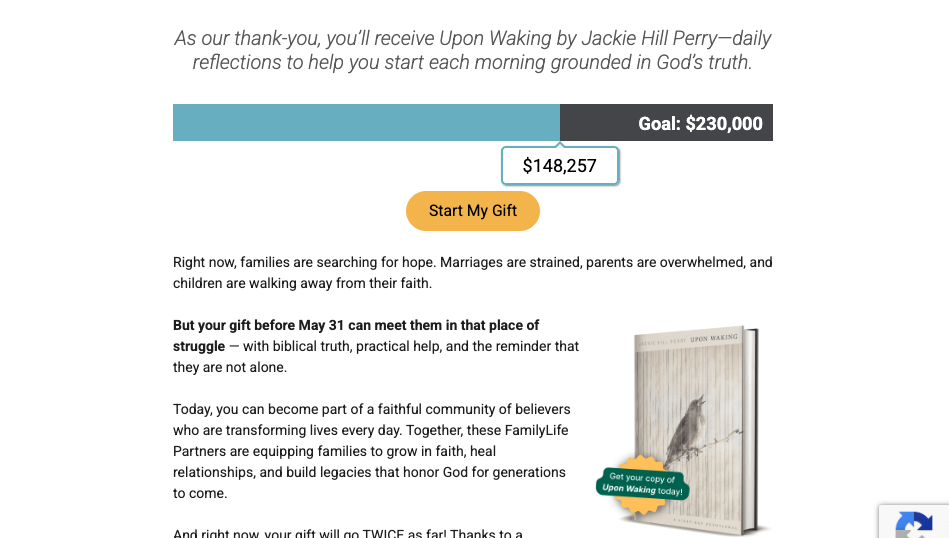
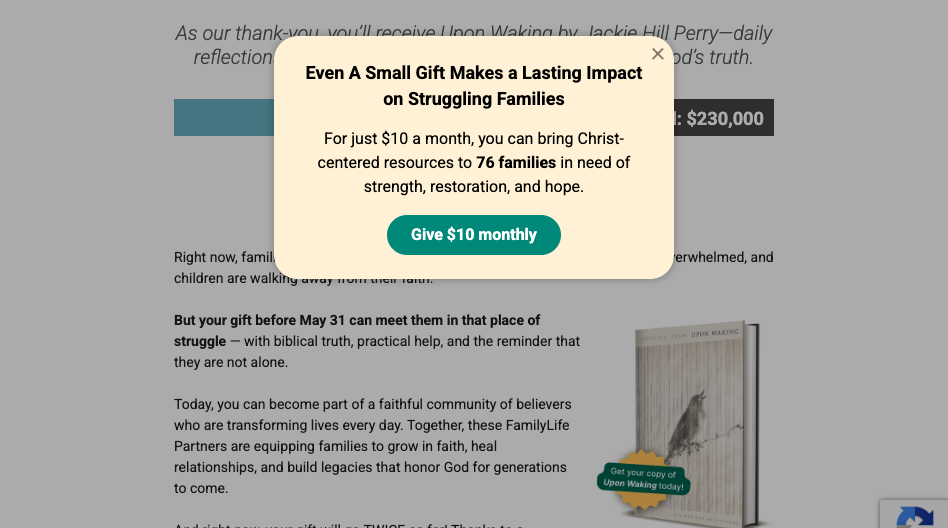
During year-end, donation pages have, at best, a 3 percent success rate, which means most visitors start the process without finishing it. In this experiment, we wanted to recapture some of that lost opportunity. We tested an exit-intent pop-up on the donation page that appeared when a user showed signs of leaving. The pop-up offered a lower-barrier, monthly gift option with simple, impact-focused messaging. The idea was to turn a failed visit into a smaller, but successful, commitment. The result? The version with the exit-intent pop-up generated more completed gifts, showing how a well-timed prompt can change the outcome.
Why It Matters at Year-End:
During Calendar Year-End, donors are moving quickly and failing to complete their donations for many reasons: distractions, uncertainty, second thoughts, or simply the pressure of a crowded season. An exit-intent pop-up gives you a last chance to engage someone who was motivated enough to start the giving process but pulled away at the final moment. It is a form of digital fundraising optimization that responds to real donor behavior insights, offering a timely, lower-friction option that feels easier to say yes to. During high-urgency periods, these small interventions can reclaim meaningful revenue.
Takeaway:
A well-timed exit-intent pop-up can turn abandoned donation attempts into completed gifts.
Number 6: Too Many Clicks Spoil the Gift
Control
Treatment
What We Tested:
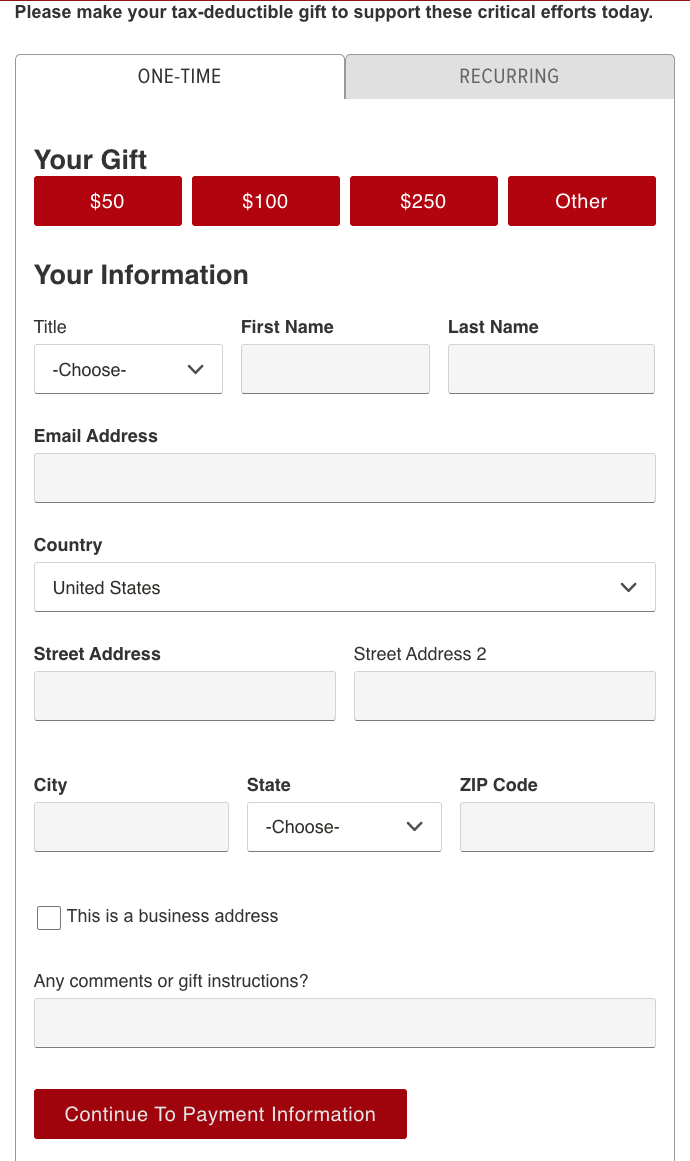
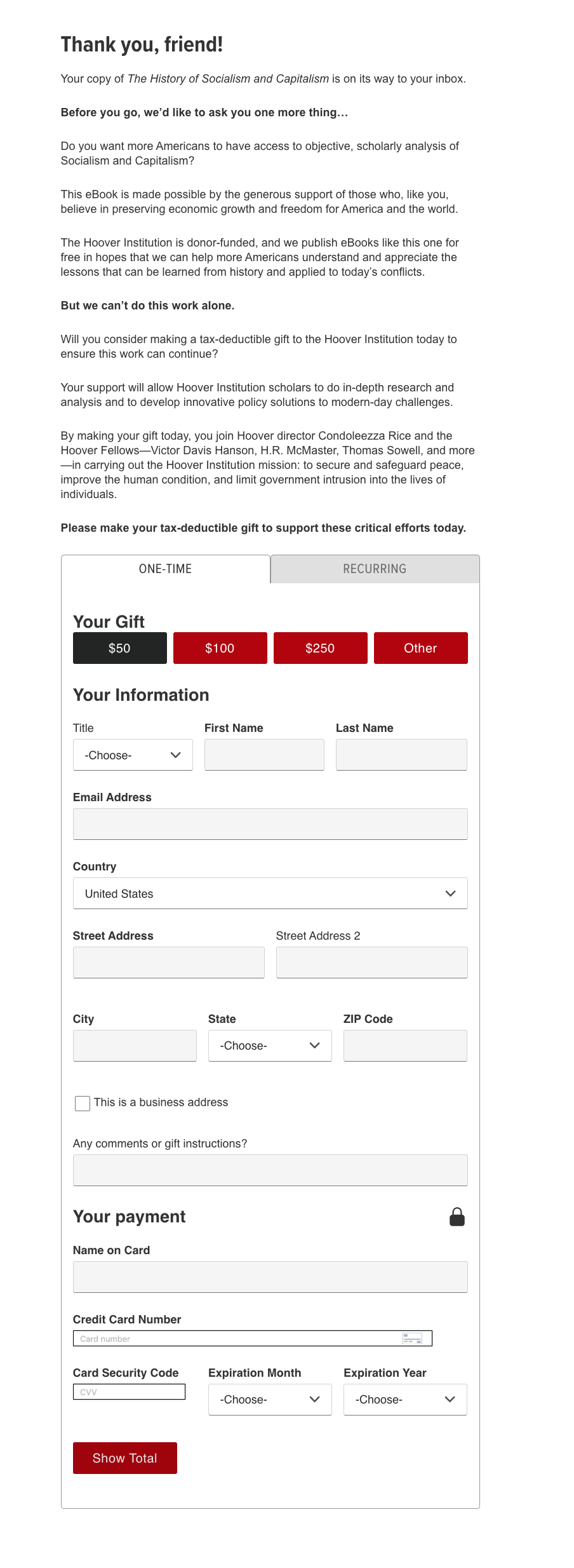
In this experiment, we wanted to understand how the number of steps in a donation form affects completion rates. The existing form used a two-step process where donors entered their personal information first and then clicked to reveal a second page with the payment section. Based on recent testing trends, we created a simplified one-step version that presented all fields at once. The goal was to see whether removing the extra click and reducing friction would increase conversions. The one-step form outperformed the two-step version, showing that fewer barriers can help more donors finish the process.
Why It Matters at Year-End:
During Calendar Year-End, donors are moving quickly and may not have the patience to click through multiple steps. Even one extra decision point can cause hesitation or abandonment. A simpler form is a practical approach to year-end donation page optimization, especially at a time when attention spans are short and motivation is high. Making the giving experience feel easier can help more supporters follow through and complete their gift.
Takeaway:
Reducing the number of steps in your donation form can lead to more completed gifts.
Number 5: No One Remembers Their Last Gift Amount
Control
Treatment
What We Tested:
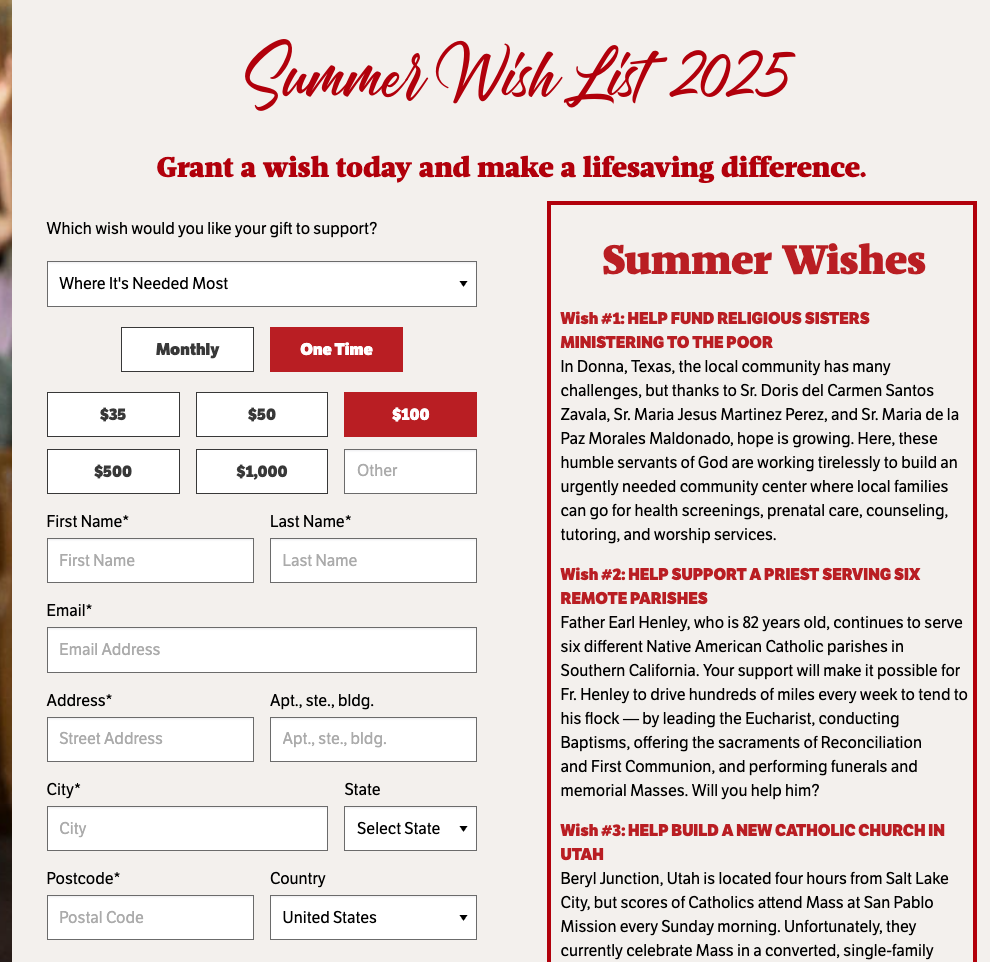
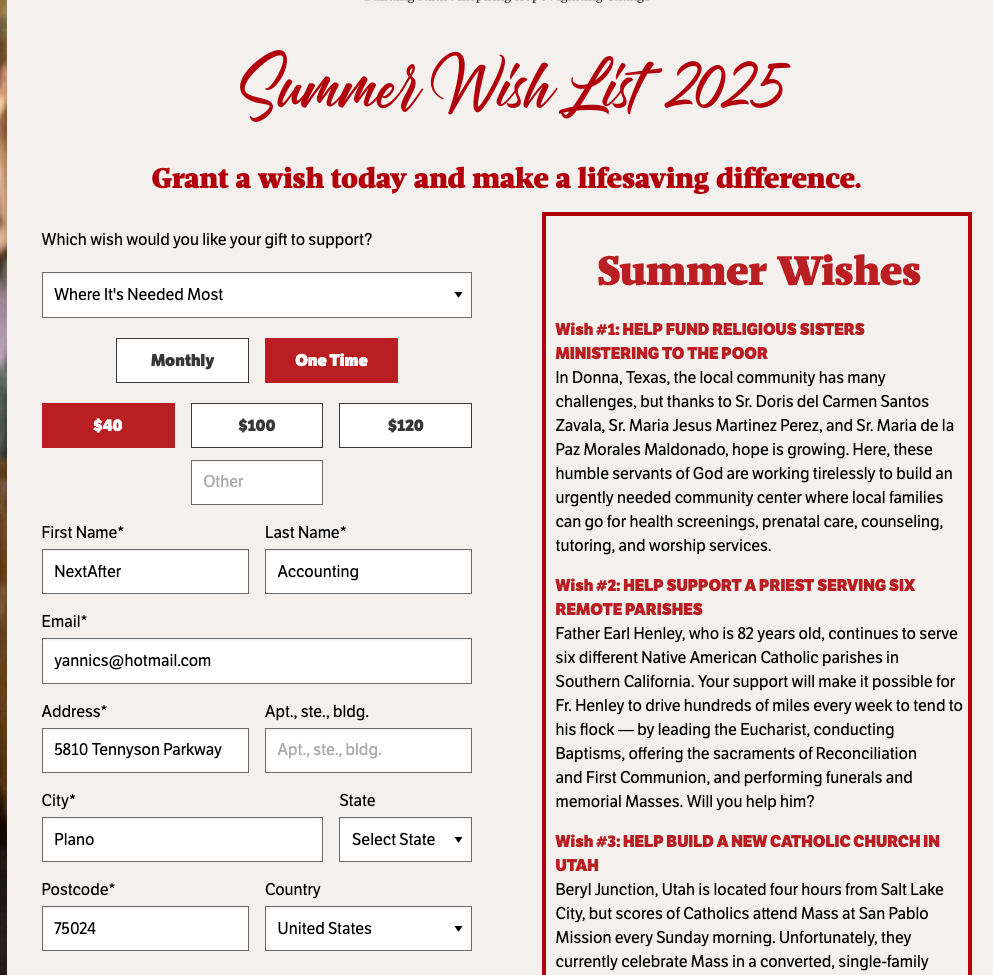
This might sound like experiment #8 on this list, but it focuses on a different psychological principle.This experiment focused on gift array testing for returning donors. Most people do not remember the exact amount they donated last time, so we created a dynamic gift array that automatically adjusted to each donor’s previous single gift. The array included three options: their last gift, their last gift increased by 150 percent, and their last gift increased by 200 percent. The goal was to see whether anchoring donors to their past behavior would increase both conversions and revenue. The interesting result from this experiment is that while conversions overall increased, the dynamic array based on last gift history didn’t do a better job of getting donors to give a donation that was higher than their last gift!
Why It Matters at Year-End:
During Calendar Year-End, donors are moving quickly and relying on instinct more than memory. A dynamic gift array takes advantage of anchoring psychology by reminding donors of what they gave before and giving them structured options to choose from. Even if donors do not select a higher amount, presenting familiar numbers can reduce decision fatigue and increase the likelihood that they complete a gift at all. It can lift revenue if donors choose the higher options, and it can lift conversions overall simply by making the decision easier.
Takeaway:
Dynamic gift arrays can increase conversion, but they may not always persuade donors to give more than their last gift.
Number 4: Sometimes All You Need Is a KISS
Control
Treatment
What We Tested:
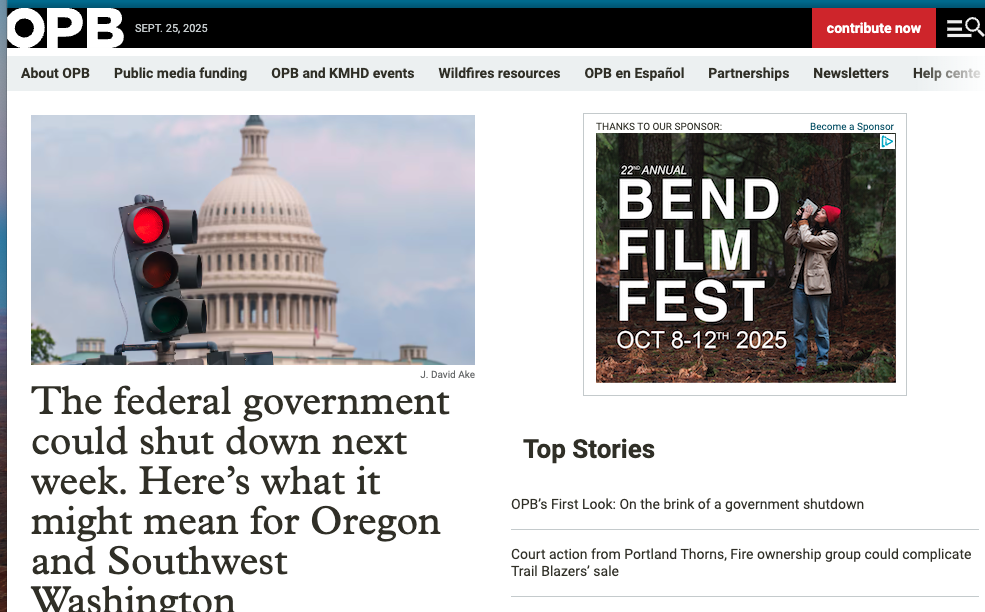
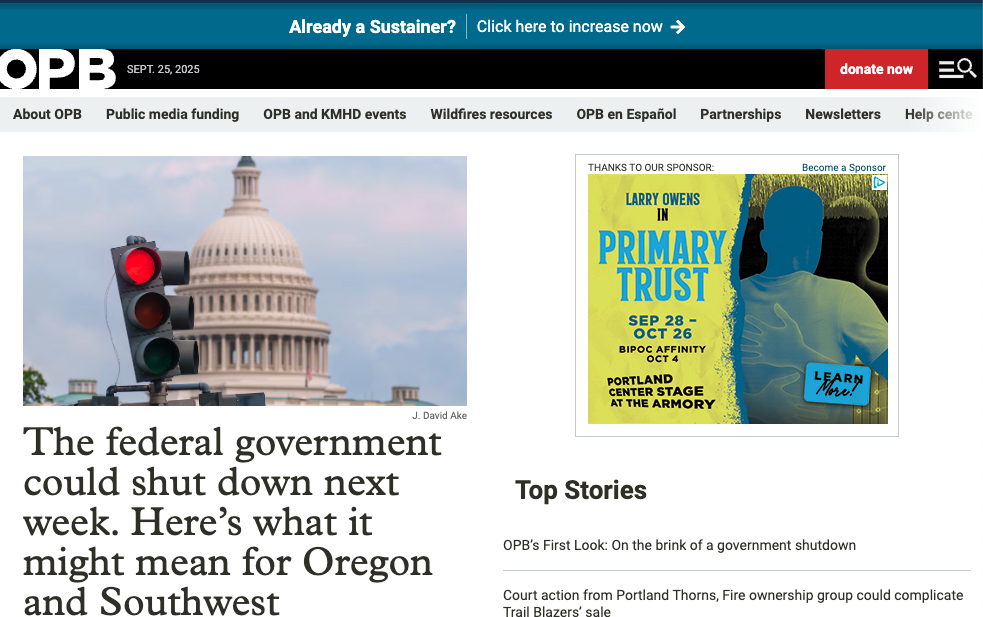
In this experiment, we tested whether simplifying the primary call to action on the main donate button would influence donor response. The control button read “contribute now,” a phrase that had been used for years. We tested it against a more direct “donate now” version to see if clearer language would increase conversions. Even in a short test window, the more direct version showed stronger performance, suggesting that small wording changes can meaningfully affect donor action.
Why It Matters at Year-End:
During year-end fundraising campaigns, when motivation is high but attention is limited, simple and direct language is often more effective. “Donate now” creates a clearer connection between the button and the action the donor intends to take. It aligns with basic donor psychology, where clarity reduces hesitation and encourages people to follow through without overthinking.
Takeaway:
Test more direct call-to-action language to see if it increases donor conversions.
Number 3: Sometimes, You Just Need to Tell the Truth
Control
Treatment
What We Tested:
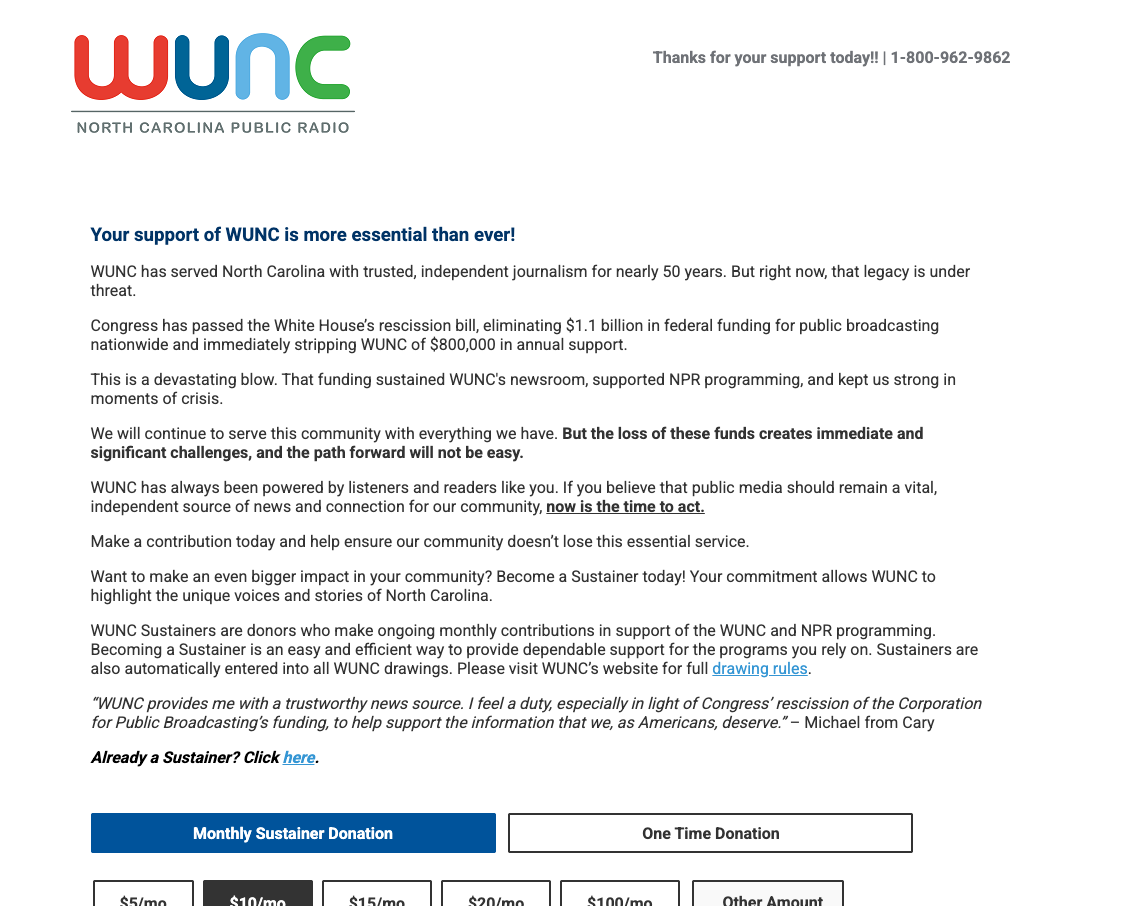
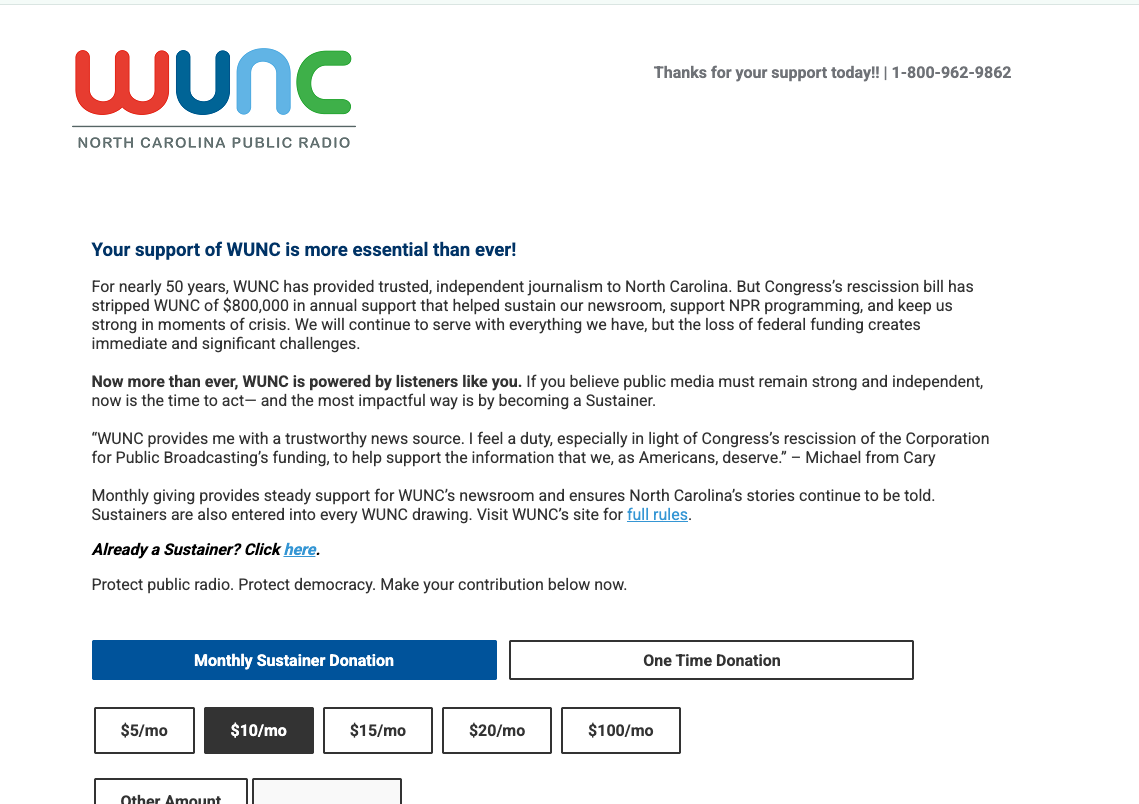
In this experiment, we wanted to understand whether direct, explicit messaging would perform better than softer, more indirect language during a period of high urgency. The control version used a suggestive tone, hinting at the issue without naming it directly. The treatment spelled out the problem clearly and referenced the specific threat supporters were concerned about. Both versions led to the same donation page, allowing us to isolate the impact of message clarity. The more direct version increased conversions, showing that removing ambiguity can motivate more people to take action.
Why It Matters at Year-End:
During Calendar Year-End, donors are inundated with messages from many nonprofits. When motivation is high but attention is limited, clear and direct messaging can cut through the noise more effectively than general statements. Explicitly stating the problem, the stakes, and the action needed taps into the urgency donors already feel at this time of year. It aligns with the dynamics of urgency in fundraising, helping potential supporters make quicker, more confident decisions.
After all, without a problem to solve, there is no reason for a donor to give.
Takeaway:
Clear, direct messaging can increase conversion during urgent fundraising moments.
Number 2: Talking About Pain Increases Revenue
Control
Treatment
What We Tested:
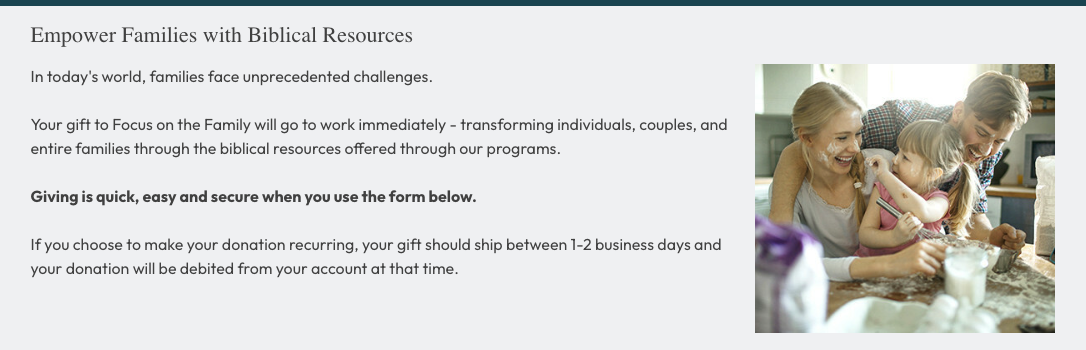
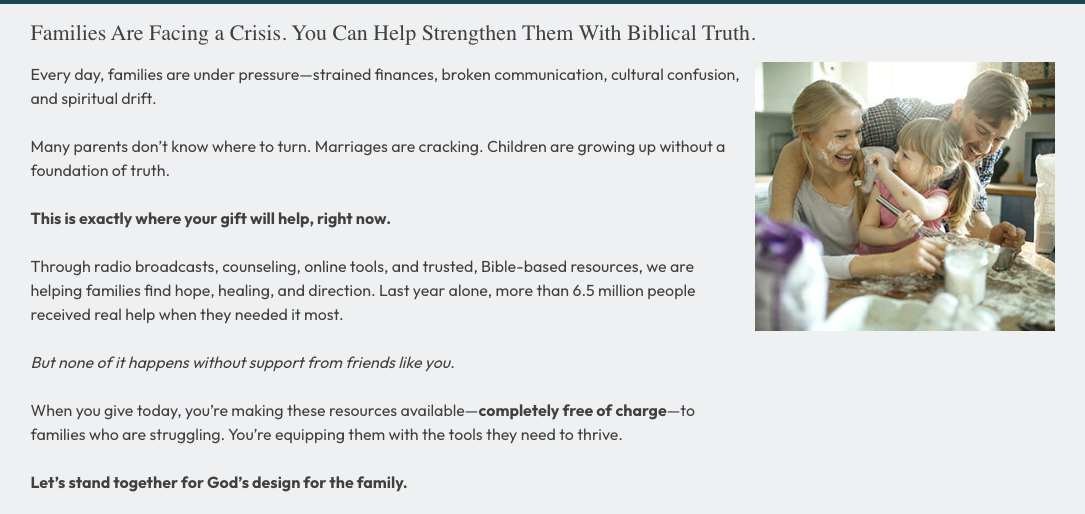
In this experiment, we focused on value proposition testing to understand how problem clarity affects donor response. The control version used a general message about empowering families. The treatment took a different approach by describing the specific challenges families are facing, including financial strain, communication breakdown, cultural pressures, and spiritual uncertainty. It then positioned the donor’s gift as a direct way to meet these needs. By making the problem more vivid and the donor’s role more concrete, the treatment increased both conversions and revenue.
Why It Matters at Year-End:
During Calendar Year-End, donors are paying closer attention to the problems they care about, but they are also overwhelmed with broad, generic messages. Clear, specific problem framing can help your message stand out and feel more relevant. When donors understand the real pain someone is experiencing and see how their gift provides a direct solution, their motivation to give increases. It aligns with the basic donor behavior insights that people respond more strongly when the need is vivid and the impact is clear.
Takeaway:
Making the problem more specific and urgent can increase conversions and revenue.
Number 1: Glengarry Glenn Ross Said It Best: Always. Be. Closing.
Control

Treatment
What We Tested:
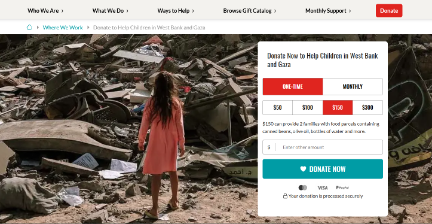
In this experiment, we wanted to see whether placing a donation module at the top of a campaign page would reduce friction and increase the likelihood that visitors would give. The standard page required donors to scroll or click before they could access the form. The treatment moved the donation module into the hero section so users could take action immediately. The simplified experience produced a clear conversion lift, showing that putting the ask front and center makes it easier for motivated visitors to follow through.
Why It Matters at Year-End:
During Calendar Year-End, donors often arrive on your campaign pages with the intent to give, but even a small amount of friction can interrupt that momentum (remember the 20% conversion rate we mentioned earlier?). By placing the opportunity to donate at the top of the page, you remove extra steps and keep the donor’s focus on what matters. When users can act the moment they feel motivated, more of them complete the gift. Making the ask immediately visible is an effective way to support year-end performance, especially when donors are moving quickly.
Takeaway:
Putting the donation ask front and center can increase donor conversions.
And there you have it. The Top 10 Year-End Fundraising Ideas of the Year!
Now, if only optimizing donor engagement could also clean up our email inboxes.
As you plan your year-end fundraising strategies, consider where a small test or a simple tweak could help you remove friction, clarify your message, or make the donor’s decision easier.
Every experiment gives you a better understanding of how people think, behave, and choose to give, and those insights compound over time.
As always, keep testing!
Yanni & Ardee
